
Every vendor page defines omnichannel customer service with the same airport-lounge language, and Google now ranks a Reddit thread asking what the term even means. Fair question. Strip the buzzword and there is a real, testable capability underneath - one that small teams can get without buying a contact center suite. This guide defines it in plain terms, separates it from multichannel, and walks through the setup that actually works when your team is three people, not three hundred.
What is omnichannel customer service?
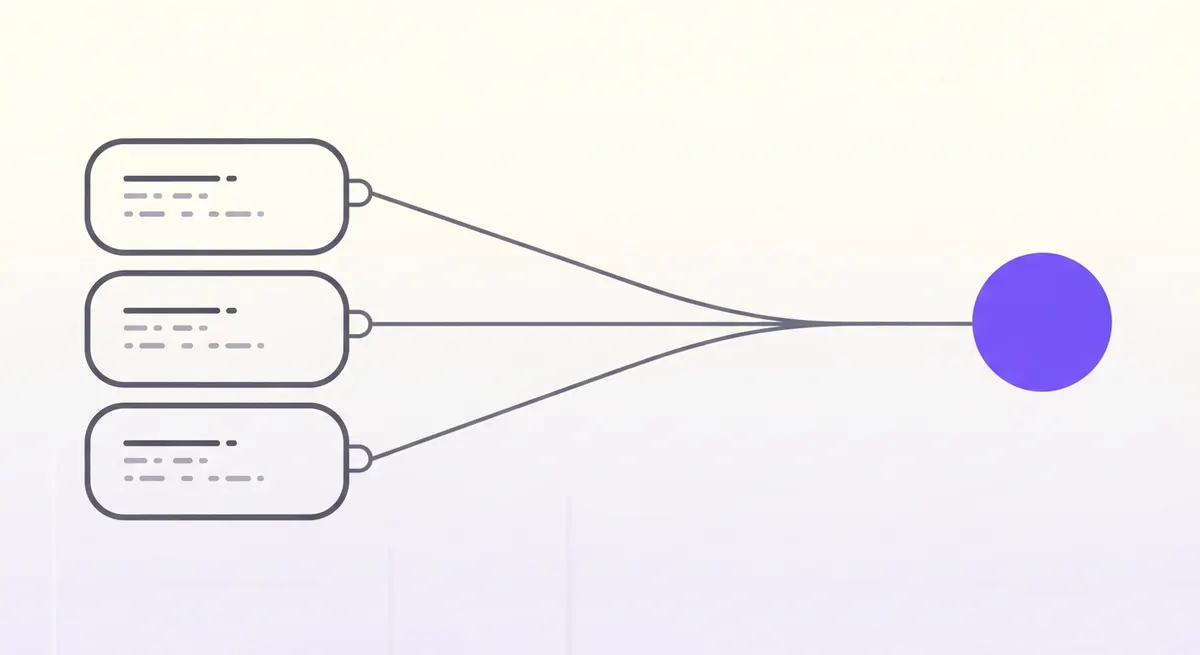
Omnichannel customer service is support where every channel feeds one conversation history, so a customer can start on website chat, follow up by email, and finish on WhatsApp without repeating anything. The agent answering - human or AI - sees the whole story regardless of where each message came from.
In simple words: the customer has one conversation with your company, not one conversation per app.
That definition gives you a test you can run against any setup, including your own. Ask a question in the website chat widget, then email a follow-up about the same issue. If whoever answers the email can see the chat, you have omnichannel customer service. If they ask you to explain from the start, you have separate tools wearing a shared name.
Omnichannel vs multichannel customer service
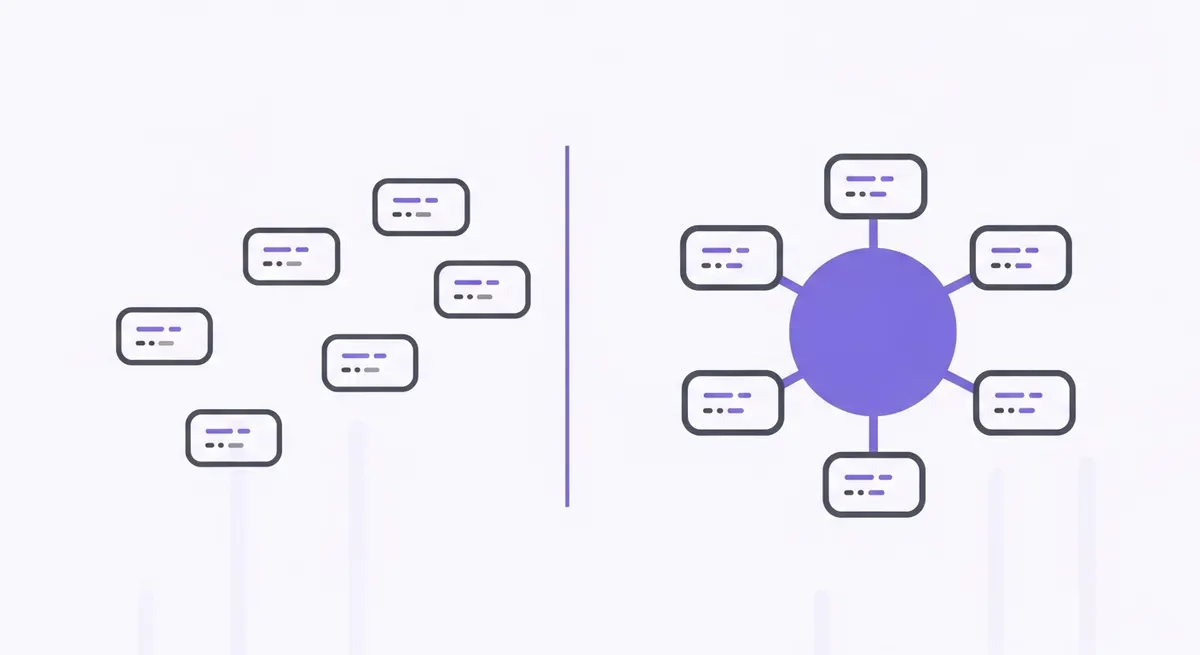
Multichannel means you are reachable on many channels. Omnichannel means those channels share one memory. A team can be excellent at multichannel support and still make every customer repeat themselves at each channel switch.
| Multichannel | Omnichannel | |
|---|---|---|
| Channels | Many, separate | Many, connected |
| Conversation history | One per channel | One per customer |
| Channel switch | Start over | Continue |
| Knowledge | Per-tool answers, drifting | One knowledge base everywhere |
| Team view | Five tabs, five queues | One inbox, one queue |
| Customer effort | Repeats context | Never repeats context |
The gap shows up at the worst moment. A customer who switches channels mid-issue is usually already frustrated - the chat went unanswered, or the email sat overnight. Making that customer re-explain their problem is how a delayed reply becomes a churned account - and it is the moment the omnichannel customer experience is actually judged.
What omnichannel looks like in practice
A concrete example: a customer asks about a refund in your website chat at 4 pm, gets a partial answer, and leaves. At 9 pm they email "following up on my refund question." The next morning they message your WhatsApp number: "any update?"
In an omnichannel setup, all three messages land in the same conversation in one inbox. The AI agent answered the chat from the knowledge base, saw the email was the same issue, and replied with the refund status instead of a generic greeting. When the WhatsApp message arrived, a human picked up the thread with full context and closed it in one reply. Three channels, one conversation, zero repetition.
In a multichannel setup, that same customer exists three times: a chat transcript nobody will reread, an email ticket with no history, and a WhatsApp thread where someone types "Hi! How can I help you today?" to a person who has now explained a refund three times.
Why the enterprise omnichannel playbook fails small teams
Most omnichannel customer service strategy content is written for contact centers, so it optimizes for problems you don't have: voice queue routing, SMS campaign compliance, social listening at scale, workforce management. Following it as a small team fails in two predictable ways.
First, channel sprawl. The enterprise playbook says be everywhere, so teams open six channels and staff none of them properly. An unanswered channel is worse than an absent one - a customer who messages your Instagram and hears nothing for two days has learned something about your company, and it isn't "they meet me where I am."
Second, tool sprawl. Stitching a chat tool, a helpdesk, and a WhatsApp API platform together produces multichannel with extra steps: three knowledge bases drifting apart, three queues to watch, and integrations that break silently. The conversation history that defines omnichannel never materializes, because no single system owns it.
The small-team version of omnichannel customer support inverts the playbook: fewer channels, one system. Website chat and email cover most products; WhatsApp earns its place when your customers already live there. Three channels in one inbox beats six channels in six tabs on every metric a small team should care about.
How to set up omnichannel customer service on a small team
Six steps, none of which require an enterprise contract. Pick the channels your customers already use, route them into one shared inbox, ground one knowledge base, put an AI agent on the first line, write one escalation rule, and measure each channel weekly. The full sequence is in the checklist at the top of this post; the three decisions that matter most:
One inbox is non-negotiable. The unified queue is what turns separate channels into one conversation. Every channel you connect must land there - the moment one channel lives in a separate tool, its history is invisible to everyone else and you are back to multichannel.
One knowledge base, not one per tool. Answers drift when they live in multiple places. A single knowledge base grounds every reply - human or AI, chat or email - in the same source of truth, and gets corrected in one place when a policy changes.
AI first, humans in the same thread. An AI agent grounded in your knowledge base can hold first-line response on every channel at once, which is how a three-person team keeps minute-level response times across chat, email, and WhatsApp. The handoff rule matters more than the AI: when the customer asks for a person or the agent has no grounded answer, a human takes over inside the same conversation. Bouncing customers to a different address or number to reach a human breaks the exact promise omnichannel makes.
What to look for in omnichannel support software
Judge omnichannel support software by whether it preserves conversation continuity, not by the length of its channel list. The channel-switch test from the definition above is the whole evaluation; these are the specifics behind it:
- One customer record across channels. The chat visitor, the email sender, and the WhatsApp number resolve to the same person, with one timeline.
- Handoff inside the thread. AI to human, or human to human, without a new ticket or a "please email us at" dead end.
- One knowledge base feeding every channel. Same answer in chat and email, corrected once.
- Channel-level metrics. First response time and resolution rate per channel, so an unstaffed channel can't hide.
- Pricing that does not punish channels. Per-channel platform fees and per-message meters quietly push you back to multichannel by making integration expensive. Flat, predictable pricing - like WhatsApp at $19 per number per month - keeps the decision about customers, not invoices.
An omnichannel helpdesk that fails the channel-switch test is a multichannel helpdesk with better marketing. Run the test during the trial, before your customers run it for you.
How to know your omnichannel setup works
Measure omnichannel customer service with four numbers: first response time per channel, resolution rate per channel, how often customers switch channels mid-issue, and CSAT on conversations that involved a switch (relationship-level NPS stays quarterly; the NPS calculator covers the math and benchmarks). The CSAT-on-switch number is the honest signal - it isolates exactly the experience omnichannel exists to fix.
First response time (FRT) per channel exposes the channel you added but never staffed. Customers weight it by expectation: an email answered in four hours feels fine, a WhatsApp message answered in four hours feels ignored. An AI agent on the first line flattens this - the first useful reply lands in seconds on every channel, and the per-channel FRT gap moves to the human handoffs, where you can actually manage it.
Channel-switch rate is underrated as a health metric. Rising switches usually mean the first channel failed - chat went unanswered, so the customer tried email. In a true omnichannel setup a switch costs the customer nothing, but each one still marks a moment your first-line response was too slow. Watch the trend, not the absolute number.
If CSAT on switched conversations tracks below your overall CSAT, context is leaking between channels: agents greeting returning customers like strangers, answers contradicting the previous channel, handoffs landing outside the thread. That gap is the multichannel tax, and closing it is the entire point of the setup in this guide.
The checklist
- Website chat and email connected. WhatsApp only if customers already use it
- Every channel lands in one shared inbox with one history per customer
- One knowledge base grounds every answer on every channel
- AI agent answers first everywhere and refuses when ungrounded
- Escalation rule written: who takes over, when, always in the same thread
- First response time and resolution rate reviewed per channel, weekly
- Channel-switch test passed: switch mid-issue, context follows
Omnichannel customer service is not a suite you buy. It is one property - the conversation follows the customer - and a small team with three channels, one AI agent, and one inbox can deliver it better than an enterprise running six disconnected tools.
Omnichannel customer service FAQ
What is an example of omnichannel customer service?
A customer asks about a refund in website chat, follows up by email that evening, and messages the company's WhatsApp the next morning. All three messages land in the same conversation, so the reply addresses the refund directly instead of greeting them like a stranger. One issue, three channels, zero repetition.
What is omnichannel in simple words?
The customer has one conversation with your company, not one per app. Wherever they message you, the history and context follow them.
What is the difference between omnichannel and multichannel customer service?
Multichannel means being reachable on many channels that do not share history - each switch starts the conversation over. Omnichannel means those channels feed one conversation record, so switching channels continues the same thread.
How do I set up omnichannel customer service?
Pick the two or three channels your customers already use, route them into one shared inbox, ground one knowledge base, let an AI agent answer first on every channel, and write a clear rule for when a human takes over inside the same conversation. Then review response time per channel weekly.
What are the four C's of omnichannel?
Consistency, continuity, context, and convenience: the same answers on every channel, conversations that continue across switches, agents who see the full history, and customers who reach you on the channel they already use. A unified inbox with one knowledge base covers all four.
What should omnichannel customer service software include?
One customer record across channels, in-thread handoff between AI and humans, a single knowledge base feeding every channel, per-channel response metrics, and pricing that does not charge per message or per integration.
Do small teams need omnichannel customer service?
Yes, but the small version: website chat and email in one inbox, WhatsApp if customers use it, one AI agent answering first. Small teams feel channel-switch pain more than enterprises because there is no headcount to absorb repeated context-gathering.